Engineering for Survival, Not Service
Run-flat systems are engineered for a single purpose: keeping an armored vehicle mobile after tire deflation. Whether it's a Hutchinson run flat VFI core, a segmented beadlock insert, or a continuous ring design, every runflat insert shares the same fundamental characteristic — it's designed to resist movement once installed. This engineering decision, essential for combat survival, creates the exact problem that makes military run flat disassemble operations so dangerous.
The physics are straightforward but unforgiving. A typical run flat insert sits inside the tire under radial compression. The interference fit between insert, rim, and tire bead creates frictional forces measured in tons — not pounds. When the Hutchinson run flat system or equivalent is properly seated, removing it requires overcoming these forces in a controlled, progressive manner. The key word is controlled.
The Uncontrolled Energy Problem
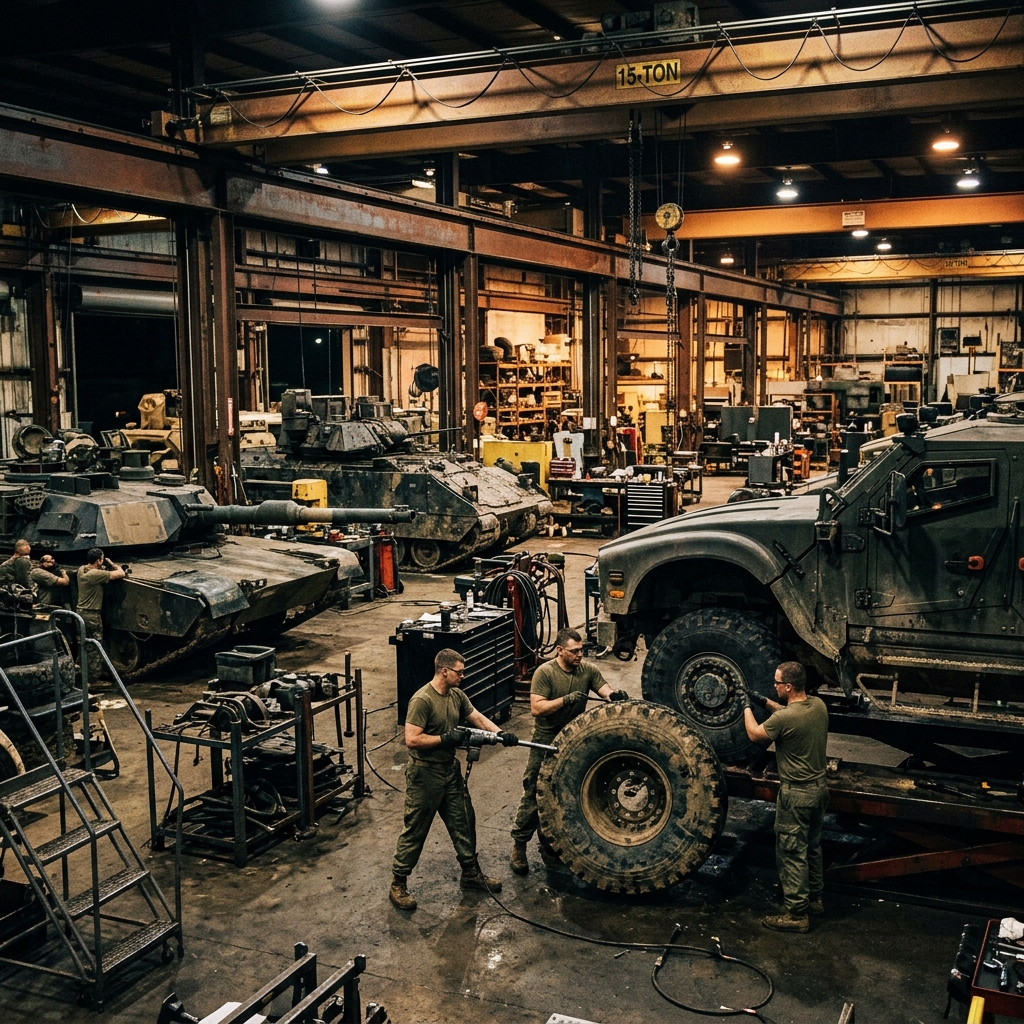
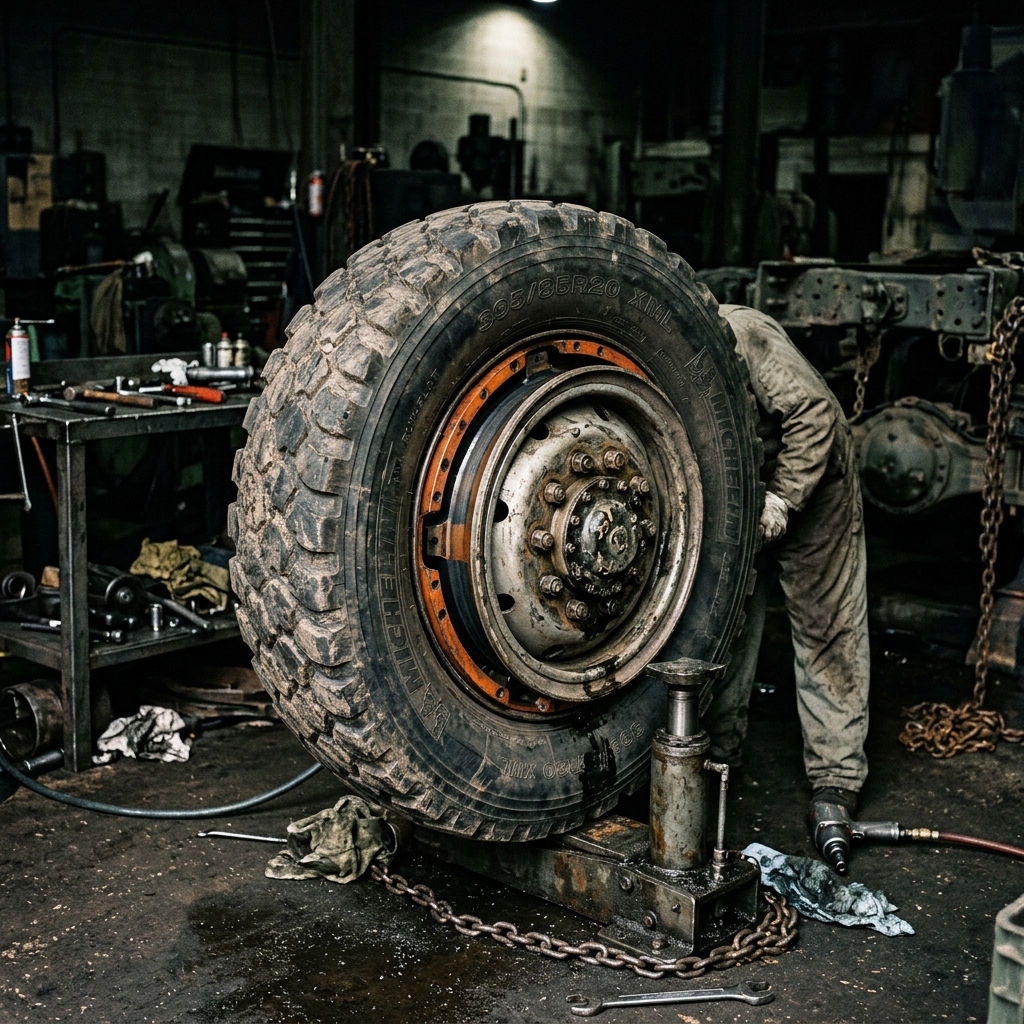
When crews attempt runflat disassembly using hand tools — sledgehammers, pry bars, hydraulic jacks — they introduce force without controlling how that energy releases. The insert doesn't move gradually; it resists, resists, then suddenly breaks free. This uncontrolled release creates three immediate hazards:
- Kinetic projectile risk: A 50–80kg runflat insert breaking free from its seat can move with enough force to cause crush injuries, fractures, or fatalities
- Tool rebound: Sledgehammer strikes against a resistant insert produce violent rebound forces that cause hand, wrist, and shoulder injuries
- Component fragmentation: Brittle materials under stress can fragment, producing projectile debris during run flat remover operations
The fundamental problem with manual run-flat removal isn't the difficulty — it's the unpredictability. Every manual extraction is a unique event with unique risks, because the failure mode is inherently uncontrolled.
How Hydraulic Architecture Solves This
The engineering solution to uncontrolled energy release is controlled, progressive force application. A purpose-built runflat disassembly machine uses dual-piston hydraulic architecture with a shielded spider press to apply uniform, progressive force across the entire insert circumference. The insert moves millimeters at a time — no sudden release, no uncontrolled energy, no projectile risk.
The difference is like comparing dynamite demolition with precision hydraulic cutting. Both achieve the same result; one does it predictably and safely. Modern run flat device handling systems incorporate force monitoring, progressive displacement control, and operator shielding that eliminate the hazards inherent in manual methods. See exactly how the dual-piston shielded-press architecture eliminates uncontrolled energy release
Compatibility Across Insert Types
One of the critical advantages of purpose-built run flat systems servicing equipment is compatibility across the full range of insert manufacturers and configurations. Whether your fleet uses:
- Hutchinson VFI cores — the most common NATO-standard run-flat insert
- Segmented beadlock inserts — used in MRAP and heavy armored platforms
- Continuous ring designs — found in lighter armored vehicles and APCs
- Multi-piece rim assemblies — common in HEMTT and heavy transport platforms
The Hutchinson run flat installation and removal process follows the same physics regardless of configuration. The question is whether that physics is managed by a machine or by a soldier with a sledgehammer. Modern runflat install tool systems handle tire sizes from 16" to 30" across all major insert types. Explore the full range of compatible run-flat systems and tire configurations
Forces transitioning from manual to machine-assisted run flat remover operations report a near-zero injury rate — compared to an average of 2.3 reportable injuries per 1,000 manual extraction events.
The Bottom Line
The physics of run-flat insert design make manual extraction inherently unpredictable and dangerous. No amount of training, technique improvement, or protective equipment changes the fundamental energy management problem. Only controlled, progressive hydraulic force application — delivered by purpose-built equipment — addresses the root cause. The technology is proven, the safety data is conclusive, and the operational benefits extend far beyond injury prevention.
Need technical specifications for your fleet's run-flat configurations?
Request Technical Documentation