The Weight Nobody Talks About
Every armored vehicle in a modern military fleet relies on run-flat tire systems to maintain mobility after ballistic damage or puncture events. These military run-flat tires — typically Hutchinson VFI cores or segmented beadlock inserts — are engineered to keep a vehicle moving for 50+ kilometers on a deflated tire. But the moment that tire needs to be serviced, the engineering advantage disappears, replaced by a military tire replacement challenge that most logistics frameworks dramatically underestimate.
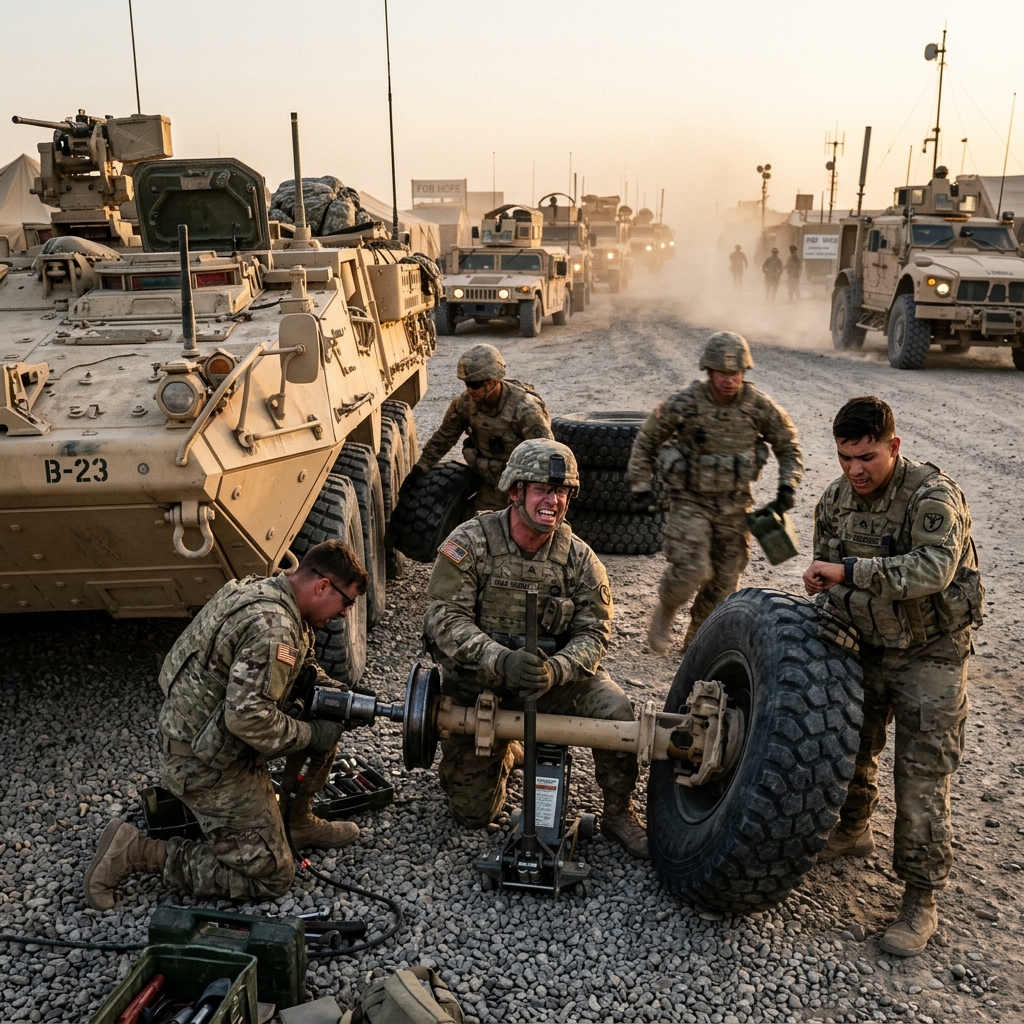
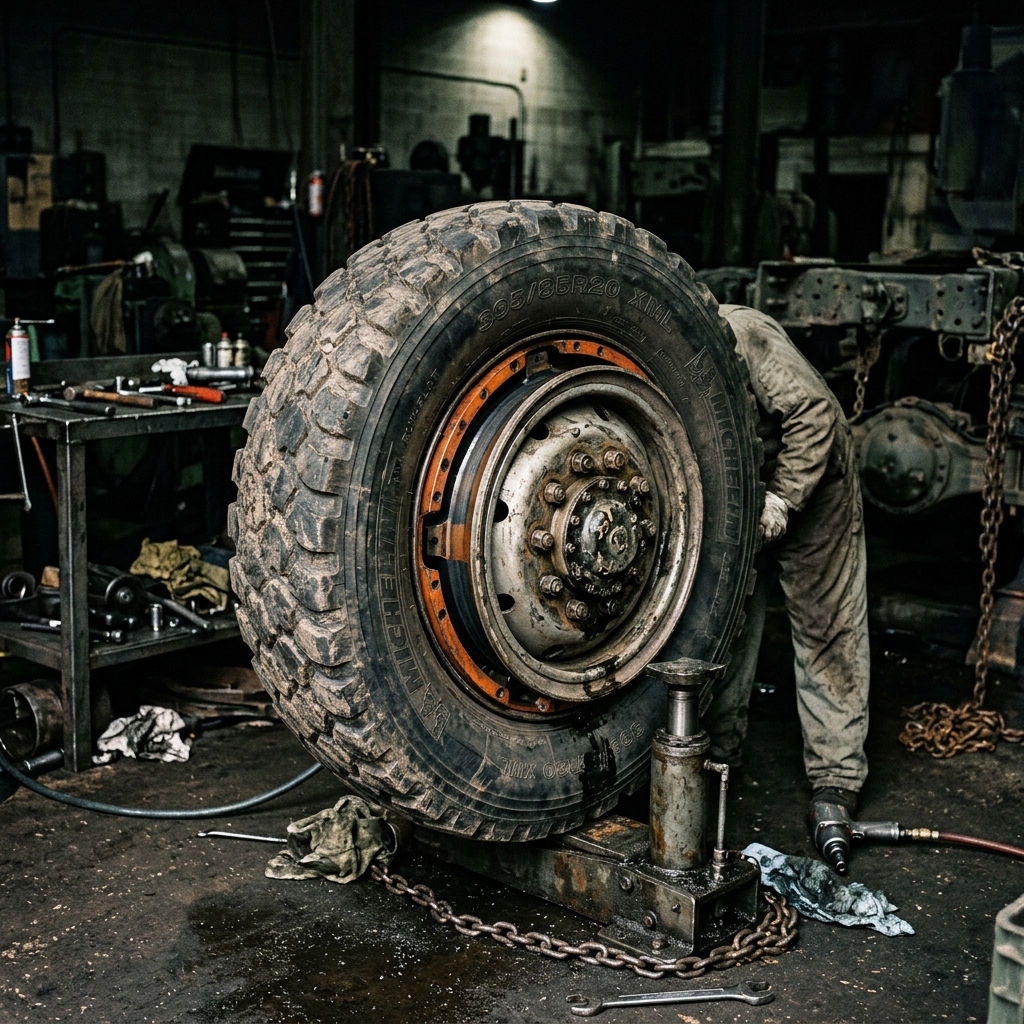
A standard run-flat tire military assembly on platforms like the Stryker, MRAP, or HMMWV weighs between 200kg and 350+kg depending on configuration. The runflat insert alone can exceed 80kg. When a crew needs to perform a military runflat replacement in the field — removing the tire, extracting the pressed-fit insert, inspecting components, and reassembling everything — they face a physical and operational burden that compounds across every wheel in the fleet.
A single run-flat tire intervention under field conditions requires 3–5 trained personnel, 30–45 minutes of exposure time, and generates measurable fatigue that degrades subsequent maintenance quality.
Quantifying the True Cost
Most procurement frameworks evaluate military tire change equipment through a simple cost-per-unit lens. But the true cost of manual run-flat disassemble and reassemble operations includes factors that never appear on a purchase order:
- Personnel strain: Heavy military tire and run-flat assemblies require manual lifting, positioning, and manipulation. Repeated handling causes fatigue, musculoskeletal stress, and increased injury probability.
- Time exposure: Every minute of manual runflat disassembly extends the operational window where personnel and vehicles are vulnerable.
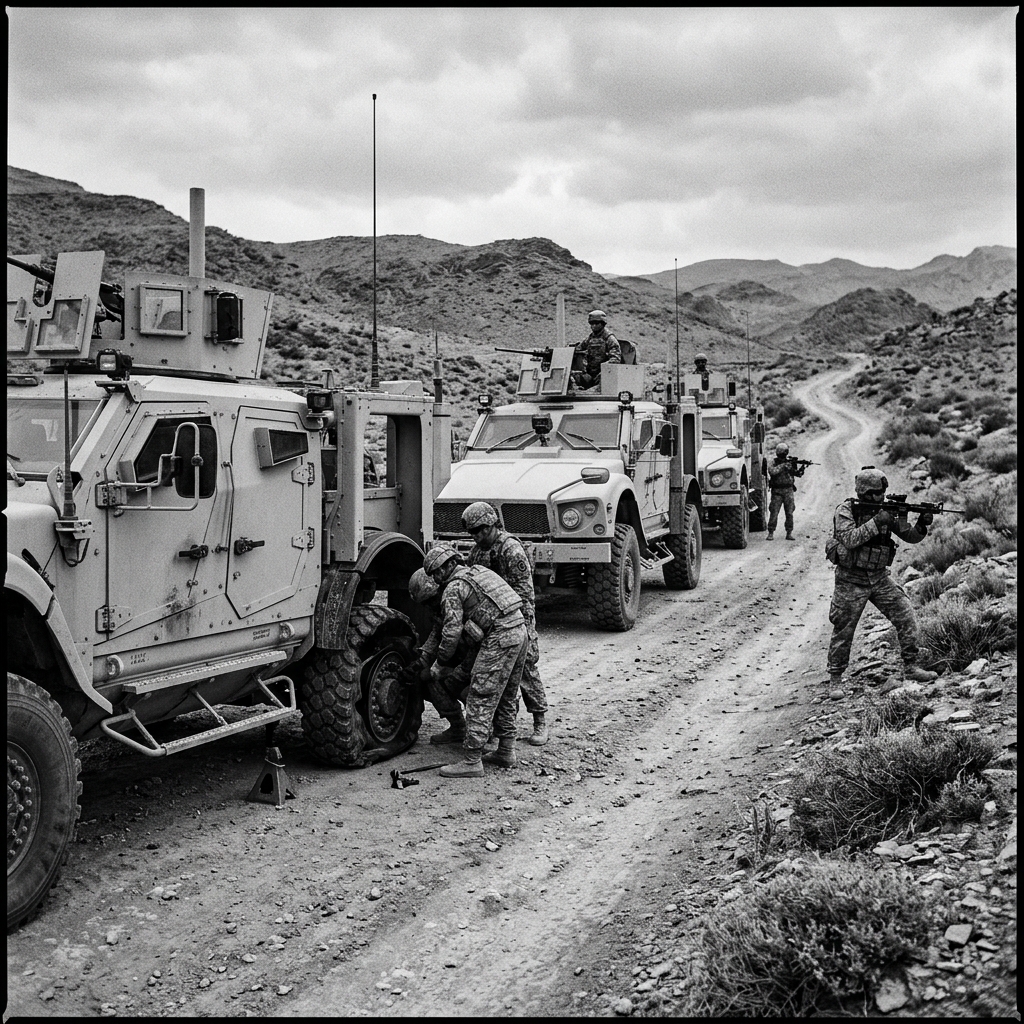
- Convoy delays: When a military run flat tire fails during movement, the entire formation stops. Manual intervention means 30+ minutes of immobility.
- Accumulated readiness loss: Across a fleet of 50+ vehicles, each requiring periodic tire service, manual methods create a compounding maintenance bottleneck.
NATO fleet analysis reveals that manual military runflat servicing accounts for an average of 34% of all unscheduled maintenance downtime across armored platforms — more than engine, transmission, and suspension issues combined.
The Physics of Failure
Understanding why manual run flat disassembly for military vehicles is so problematic requires understanding the physics involved. A pressed-fit run flat insert is designed to resist extraction. It sits inside the tire under significant compression, creating frictional forces that exceed what hand tools can safely manage. When crews attempt military run flat disassemble operations with improvised methods — sledgehammers, pry bars, jacks — the result is unpredictable energy release, component damage, and injury risk.
The runflat disassembly machine approach eliminates this entirely. What if a single machine could reduce this entire 45-minute process to under 4 minutes with just two operators? The technology exists, and it's already deployed across 30+ nations. See exactly how the hydraulic press architecture works
The Cascade Effect on Readiness
When a military tire machine isn't available and manual methods are the only option, the impact cascades through the entire operational chain:
- Immediate: 3–5 personnel pulled from other duties for 30–45 minutes per wheel
- Short-term: Fatigue accumulation reduces crew effectiveness for subsequent tasks
- Medium-term: Delayed maintenance schedules create a backlog that compounds exponentially
- Long-term: Higher injury rates, increased medical costs, and reduced personnel retention
The solution isn't working harder — it's deploying the right military run flat changer machine at the right level of maintenance. Modern heavy duty tire changer systems designed specifically for armored vehicle tire machine applications have transformed how leading defense forces approach this challenge.
Bringing Depot Capability Forward
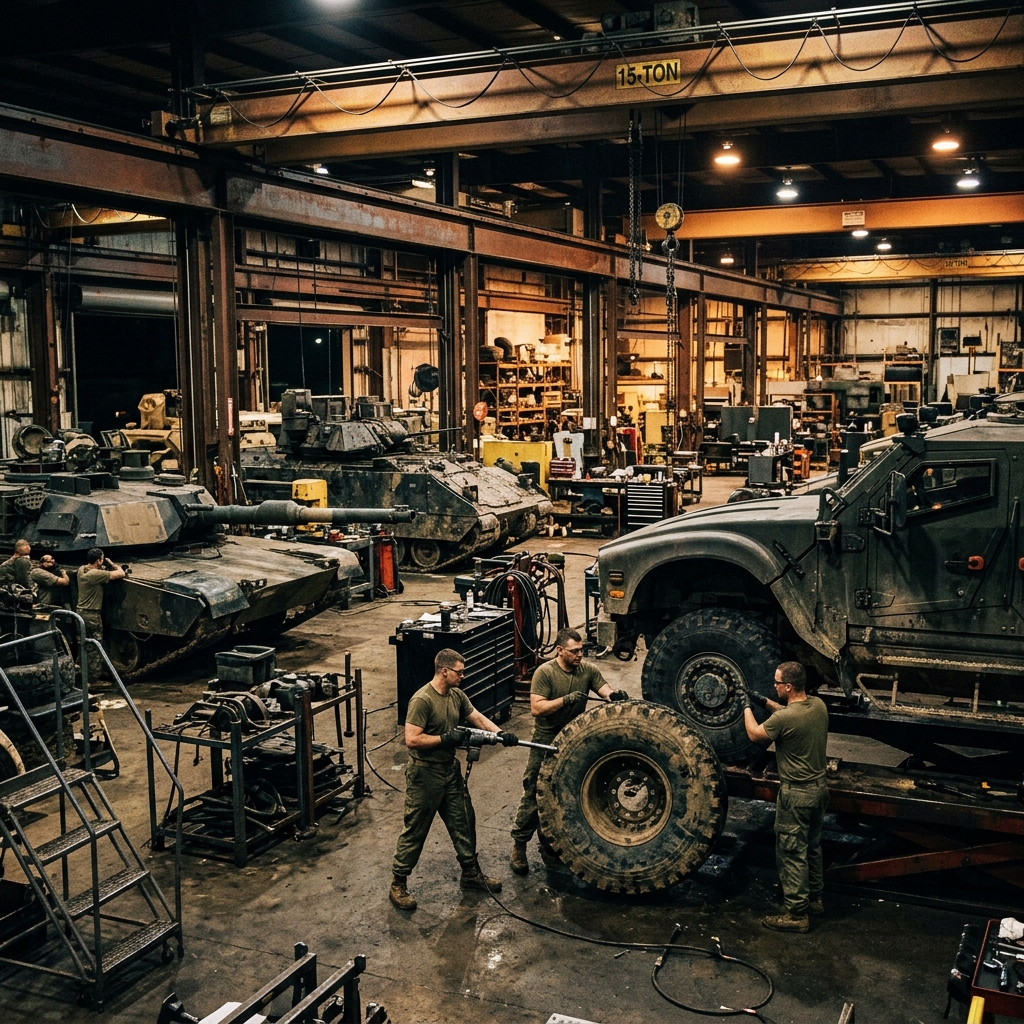
One of the most significant developments in military runflat replacement machine technology is the ability to deploy depot-level capability to forward positions. Containerized systems now bring everything needed — hydraulic press, power supply, climate control, and operator station — into a standard ISO container that can be positioned anywhere on the logistics chain. Explore how the GMH-098 Container Model brings this capability to any position
This means a run flat machine for military vehicles can operate at battalion level, reducing the evacuation requirement and keeping vehicles in the fight. The operational impact is measured not in maintenance hours saved, but in mission capability preserved.
The 30+ Nation Benchmark
The evidence is already in. Over 30 countries across 5 continents have adopted machine-assisted run flat tire changer for armored vehicles systems to replace manual intervention. The results are consistent: 85% reduction in intervention time, 90% reduction in personnel exposure, and near-zero component damage rates.
These aren't theoretical improvements — they're measured outcomes from operational fleets running Stryker, HMMWV, MRAP, and BearCat platforms daily. The question isn't whether the investment makes sense. The question is how much longer your fleet can afford to operate without it. See the nations that have already made the transition
Ready to eliminate the hidden costs of manual run-flat intervention from your fleet?
Request Operational Briefing