The Vulnerability Window
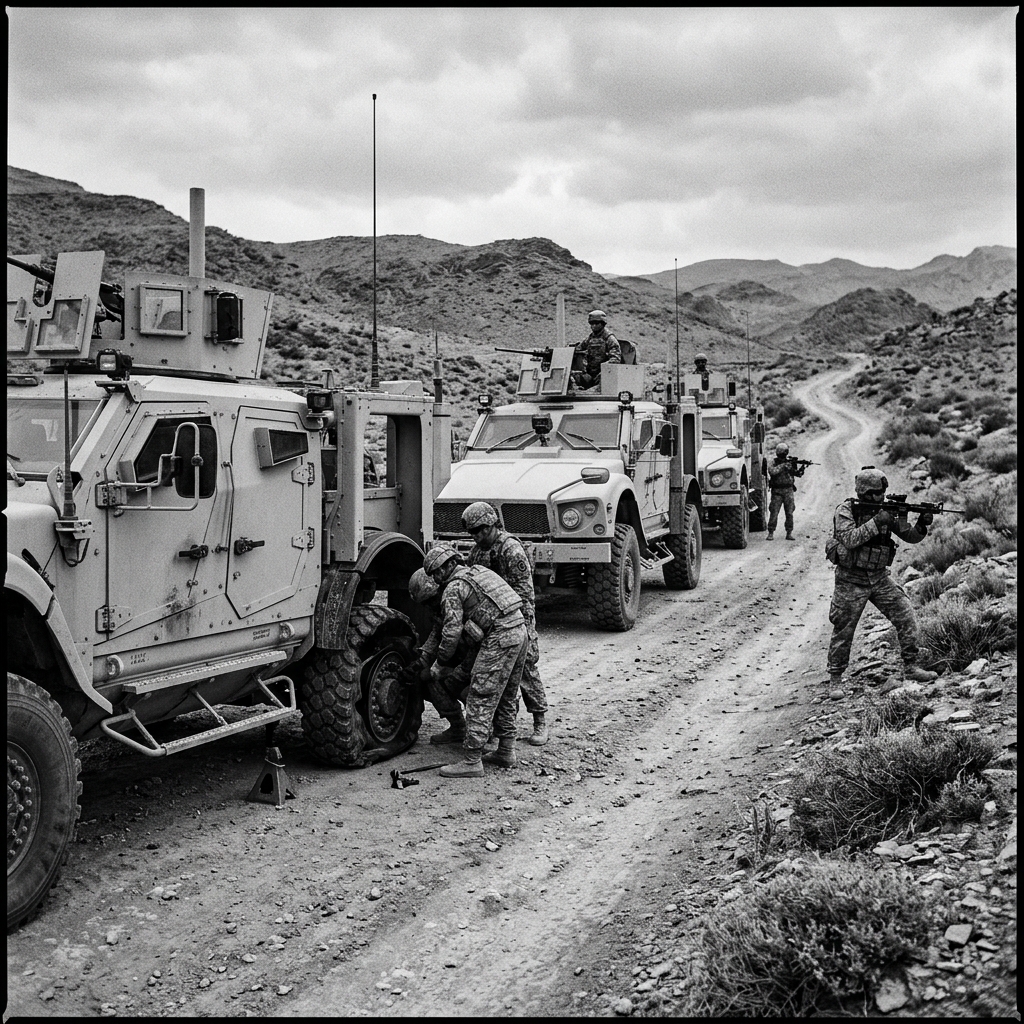
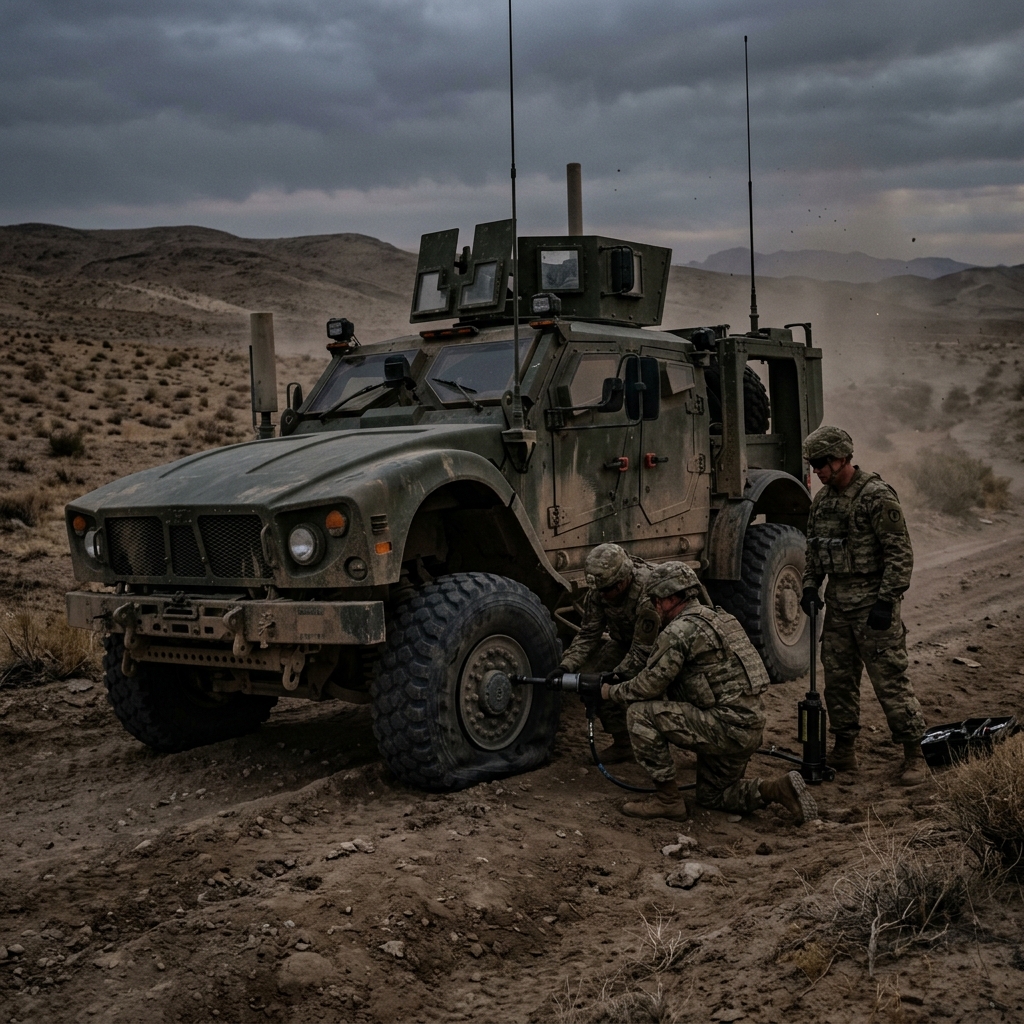
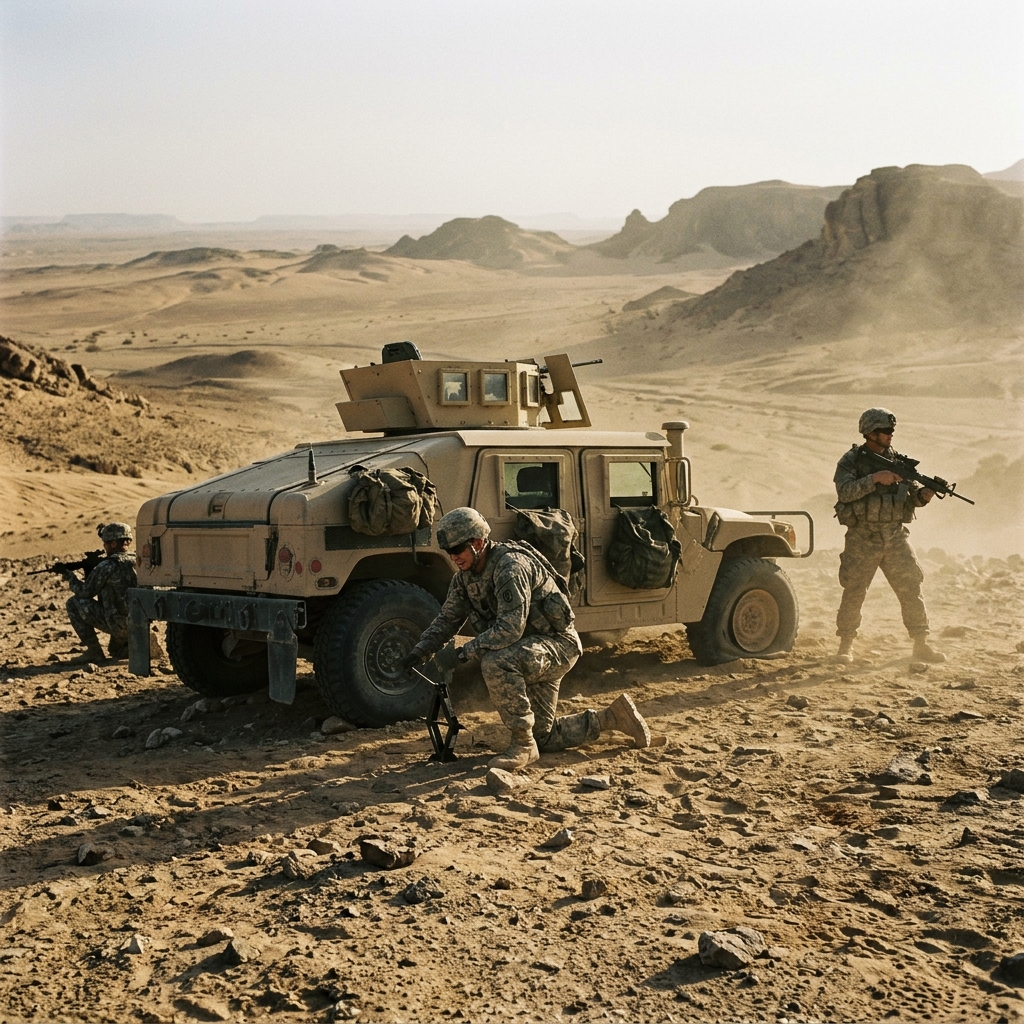
Every military run flat tire service event creates a vulnerability window — a period where personnel are outside armored protection, focused on a physically demanding task, and unable to respond to threats. In garrison environments, this is an inconvenience. In contested environments, it's a calculated risk that commanders must weigh against mission requirements.
The calculus is straightforward: manual military run flat replacement requires 3–5 personnel working outside the vehicle for 30–45 minutes per wheel. A run flat tire changer for armored vehicles reduces this to 2 operators for under 5 minutes. The threat exposure reduction isn't incremental — it's transformational.
Three Dimensions of Personnel Risk
1. Physical Injury from Manual Handling
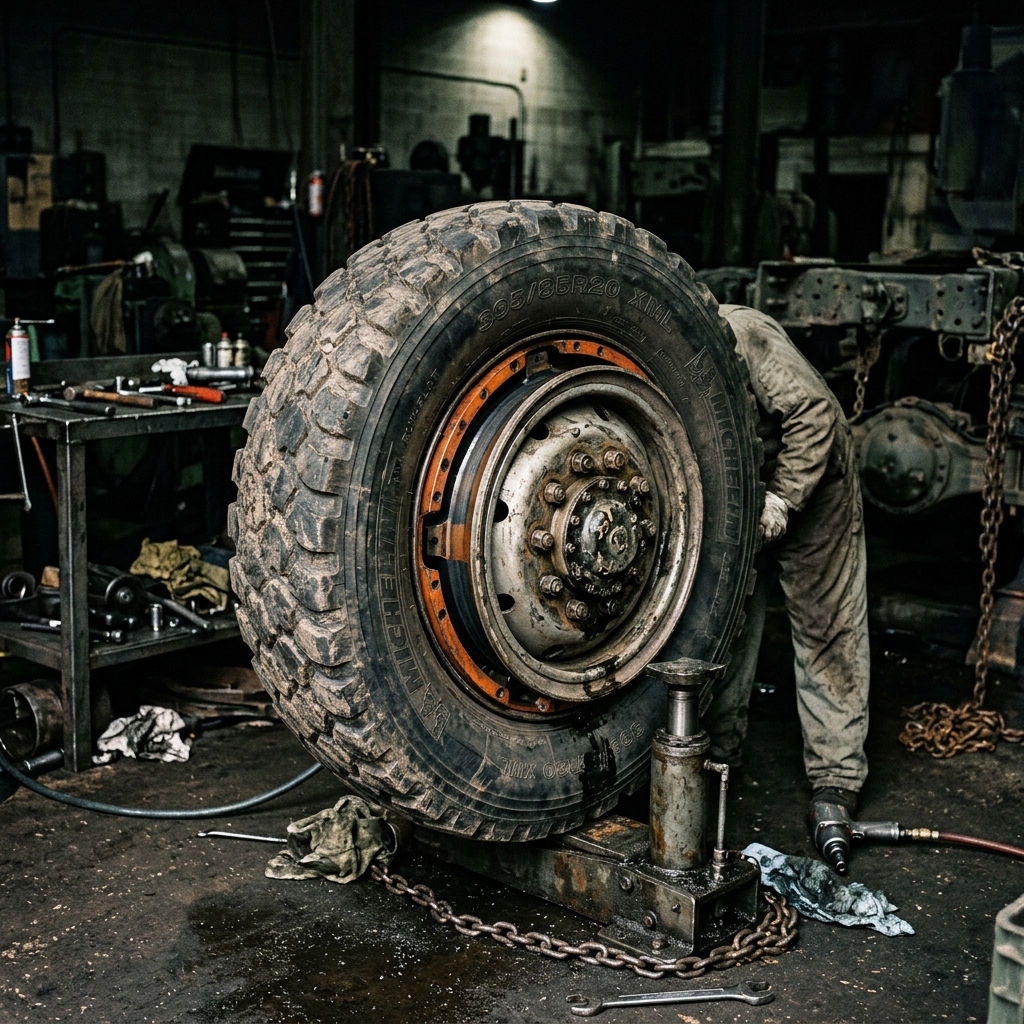
The most immediate safety concern in military tire assembly and disassembly operations is physical injury from manual handling. A run-flat tire military assembly weighing 200–350+kg requires manual lifting, positioning, and manipulation. The military tire inserter role — the person physically managing the run-flat insert — faces the highest risk:
- Crush injuries from uncontrolled insert movement during extraction
- Back and joint injuries from repetitive heavy lifting
- Hand and wrist injuries from tool rebound during hammering
- Heat exhaustion in high-temperature operational environments
2. Threat Exposure During Extended Maintenance
Field military tire inserting machine operations — when a machine is available — take minutes. Manual operations take half an hour or more. Every additional minute of exposure in a contested environment increases the probability of hostile engagement. Personnel working on a tire cannot simultaneously maintain situational awareness, operate weapons systems, or take cover.
In contested environments, the time differential between manual and machine-assisted tire service isn't a maintenance metric — it's a survival metric. Every minute outside armor is a minute of unacceptable vulnerability.
3. Psychological and Cumulative Effects
Repeated exposure to high-stress maintenance scenarios under threat conditions creates cumulative psychological effects that degrade overall unit performance. Soldiers who associate maintenance tasks with danger develop hesitation patterns that extend beyond tire service to all field maintenance activities. The tactical vehicle tire tool approach — purpose-built equipment that reduces exposure — addresses both the physical and psychological dimensions of the problem.
Self-Contained Protection
The most significant safety advancement in run flat inserting machine for armored vehicles technology is the development of self-contained systems that provide both environmental and threat protection during maintenance. Containerized run flat tire changer for armored vehicles configurations house the entire operation inside an armored or hardened enclosure. Personnel work inside the container, protected from environmental hazards and external threats, while the hydraulic system handles all heavy component manipulation. See how the GMH-098 Container Model provides self-contained protected maintenance capability
Forces using machine-assisted military tire assembly systems report zero lost-time injuries from run-flat servicing operations — compared to an average of 4.7 reportable injuries per battalion per year under manual methods.
The Duty of Care Equation
Beyond operational metrics, there is a fundamental duty of care question. When proven technology exists that can reduce personnel risk by 90%+ during routine maintenance operations, the decision to continue manual methods becomes a leadership responsibility. The military run flat replacement challenge is solved. The question is one of acquisition, not technology.
Over 30 nations have already made this decision, deploying machine-assisted systems across their armored fleets in environments ranging from peacekeeping operations to active combat zones. The safety data from these deployments is unambiguous. Review the deployment history across 30+ national defense forces
Ready to reduce personnel risk in your fleet's maintenance operations?
Request Safety Assessment