The Availability Equation
Every military commander understands that fleet availability directly determines operational capability. A brigade with 80% armored vehicle availability has fundamentally different operational options than one at 65%. Yet when we examine the root causes of unplanned downtime across NATO armored fleets, one maintenance category dominates: run-flat tire and wheel assembly servicing.
The armored vehicle tire machine question isn't a maintenance decision — it's an operational readiness decision. Every hour a Stryker, MRAP, or HMMWV sits immobilized for military tire replacement is an hour where mission planning must account for reduced capability. When that downtime is unpredictable — as it always is with manual intervention methods — the command-level impact multiplies.
Anatomy of a Downtime Event
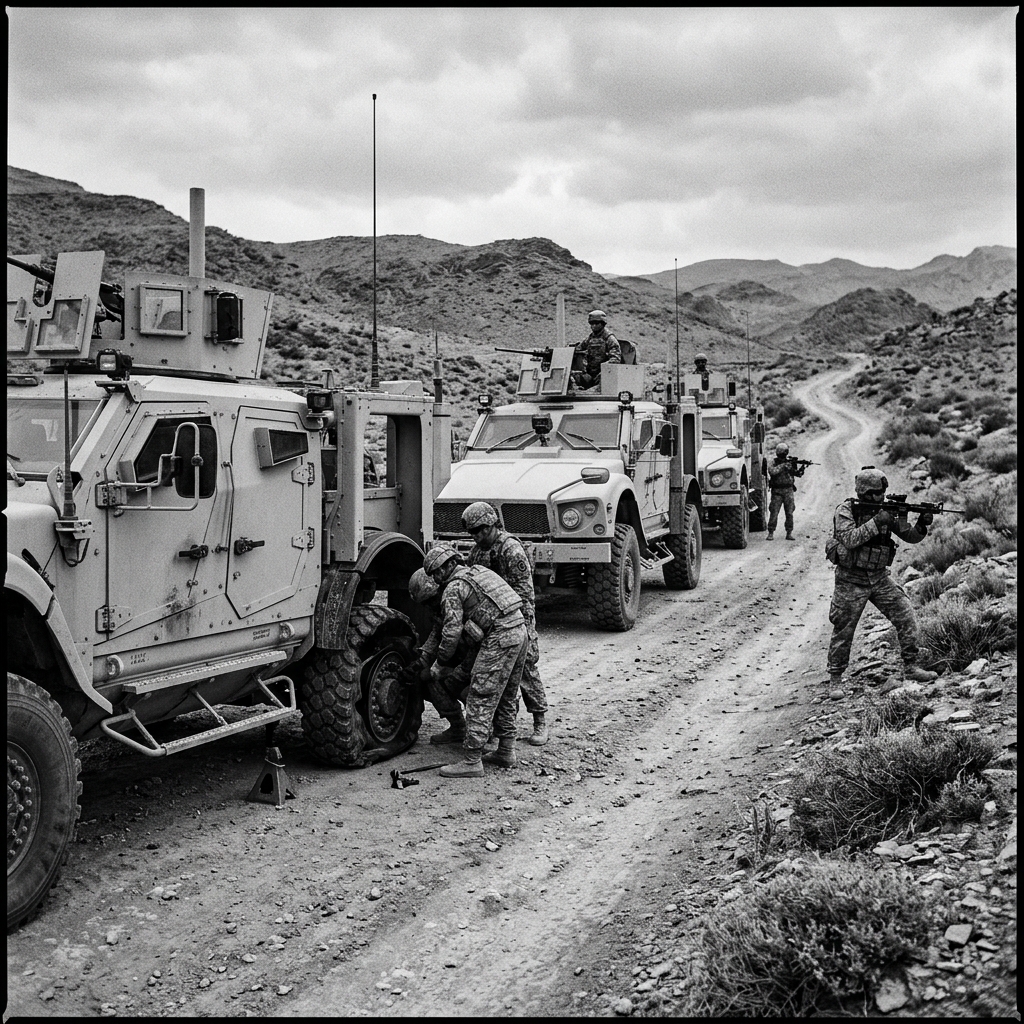
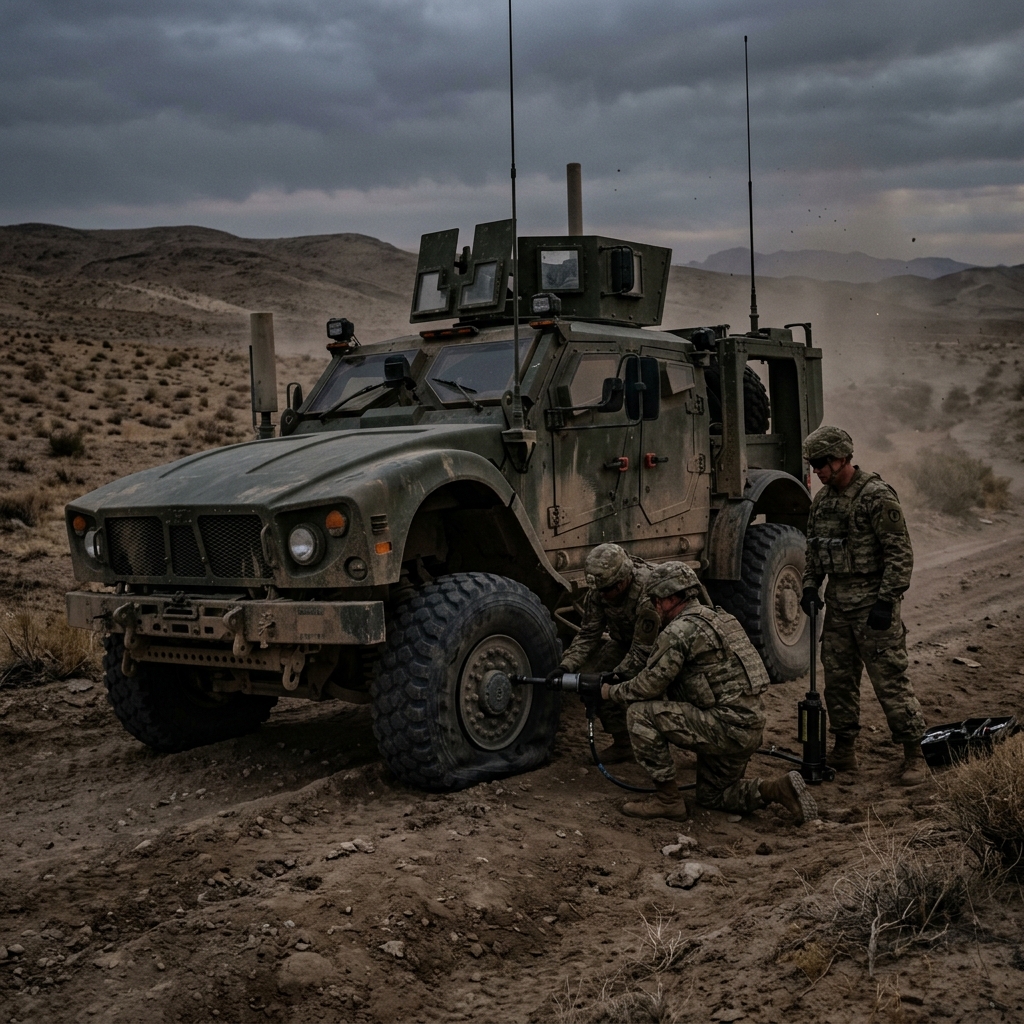
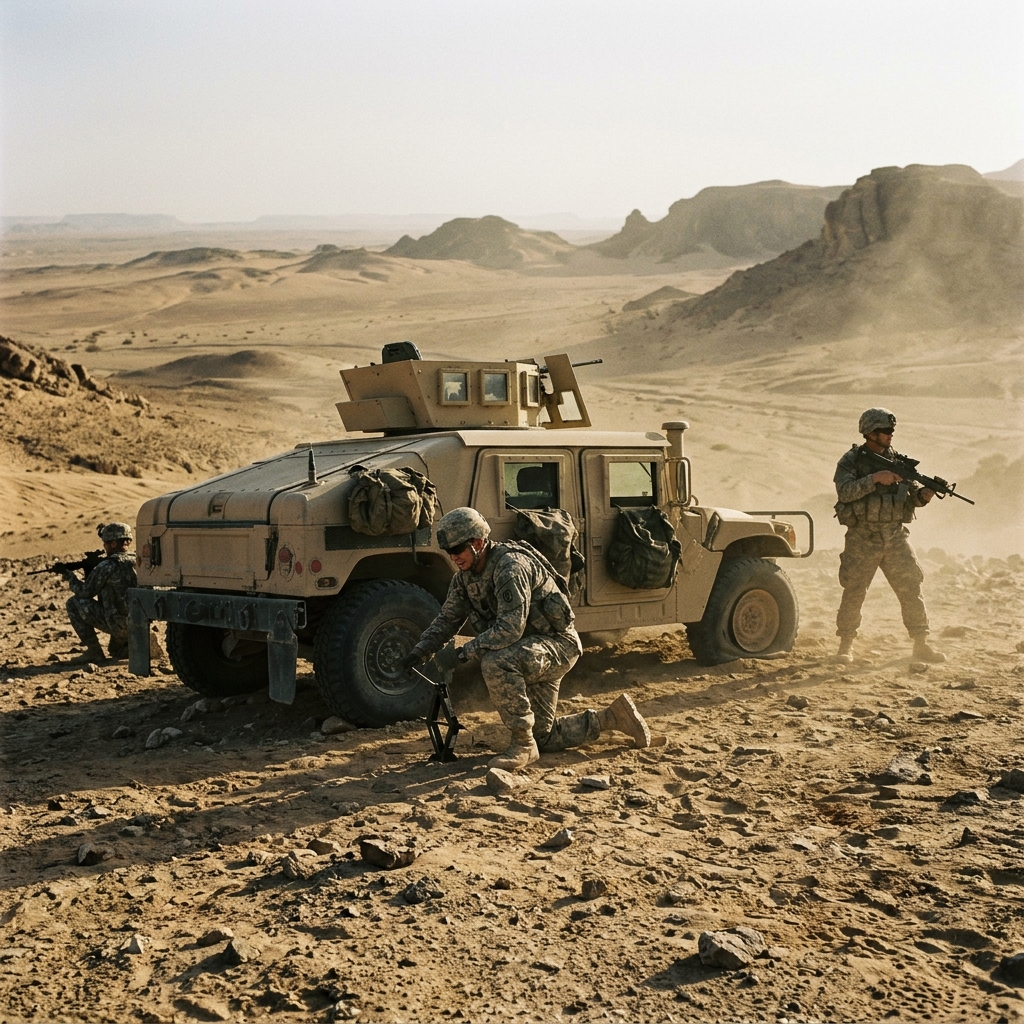
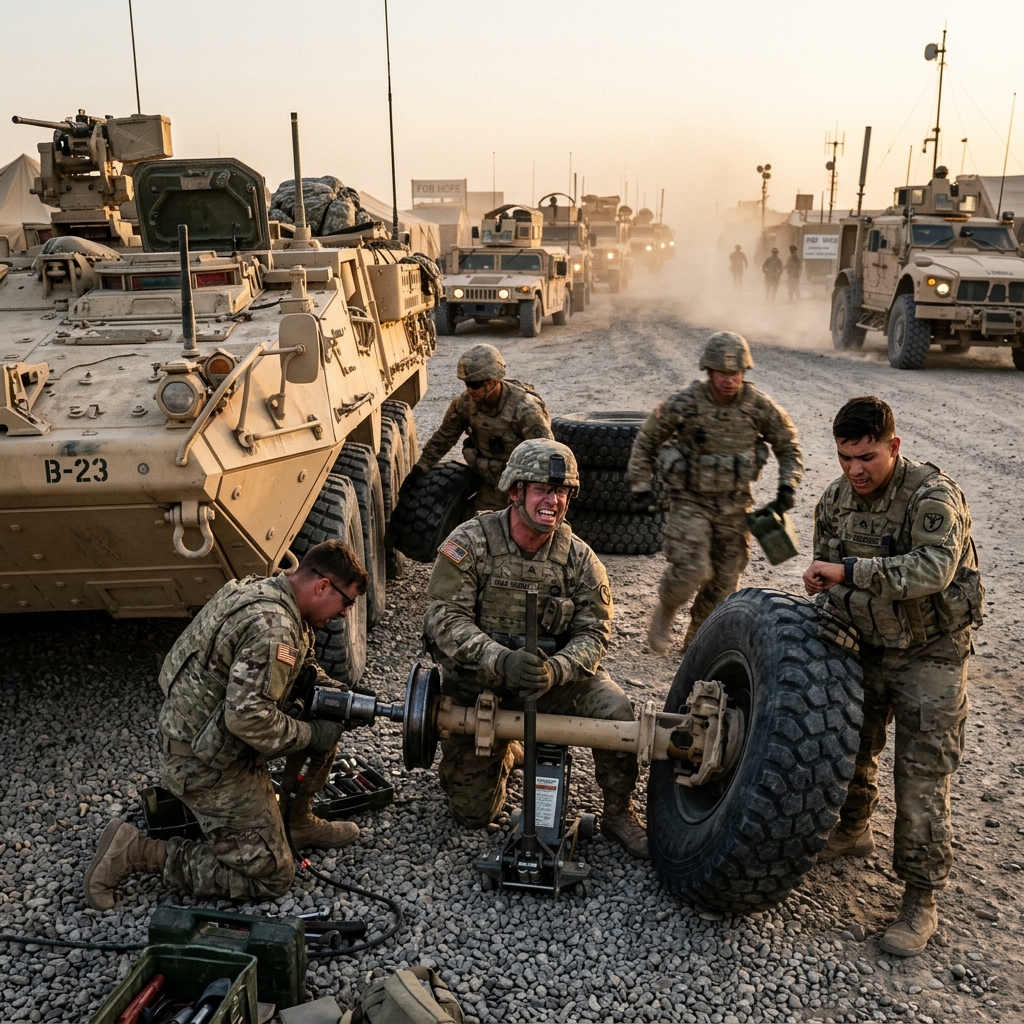
Consider a typical scenario: a combat vehicle tire changer task on a Stryker 8×8 during a scheduled maintenance cycle. Using manual methods, the process requires:
- Preparation: 10–15 minutes to position the vehicle, gather tools, and assign 3–5 crew members
- Tire removal: 8–12 minutes with military tire change equipment — jacks, breaker bars, impact wrenches
- Run-flat extraction: 15–25 minutes using pry bars, hammers, and improvised leverage — the most dangerous phase
- Inspection and reassembly: 10–15 minutes for component check and reverse procedure
- Total per wheel: 43–67 minutes with full crew commitment
For an 8-wheel Stryker requiring full tire rotation, this means 6–9 hours of dedicated maintenance time using manual methods. Now multiply across a company-sized element of 12 vehicles.
When a fleet-wide tire service takes 72–108 crew-hours using manual methods, it's not a maintenance problem — it's an operational planning crisis. The question becomes: what if each wheel took less than 4 minutes instead?
The Scheduling Cascade
The real command-level risk isn't the individual maintenance event — it's the cascading effect on mission scheduling. When a military run flat changer machine isn't available and manual methods introduce unpredictable timelines, planners must build excessive margins into every maintenance window. These margins consume training time, deployment preparation, and operational flexibility.
Modern run flat changer machine for military vehicles systems have resolved this uncertainty entirely. Workshop-grade machines now process a full wheel — tire removal, run-flat insert extraction, inspection, and reassembly — in under 4 minutes with just two operators. See how the GMR-023 Workshop Model achieves this throughput
From Reactive to Predictive
The shift from manual to machine-assisted military tire replacement machine operations transforms maintenance from a reactive bottleneck to a predictable, plannable activity. When commanders know with certainty that a full fleet tire service takes 8 hours instead of 3 days, they can schedule maintenance without sacrificing operational tempo.
Defense forces using machine-assisted run flat tire changer systems report an average 85% reduction in tire-related downtime and a corresponding increase in fleet availability that directly translates to expanded operational options.
The Command Decision
The military run flat changer investment decision ultimately sits at command level because the consequences of inaction sit at command level. Every week of continued manual operation represents:
- Reduced fleet availability during scheduled maintenance
- Unpredictable recovery timelines during field operations
- Accumulated personnel injuries and fatigue
- Compounding readiness gaps that affect mission capability
Leading defense forces across NATO and allied nations have recognized this, investing in combat vehicle tire changer systems that convert maintenance from a liability into a capability. The results are visible in fleet readiness rates, personnel health metrics, and operational tempo. See how these systems are being deployed across active military installations
Ready to transform your fleet's maintenance timeline from days to hours?
Request Operational Briefing