The Two-Tier Maintenance Problem
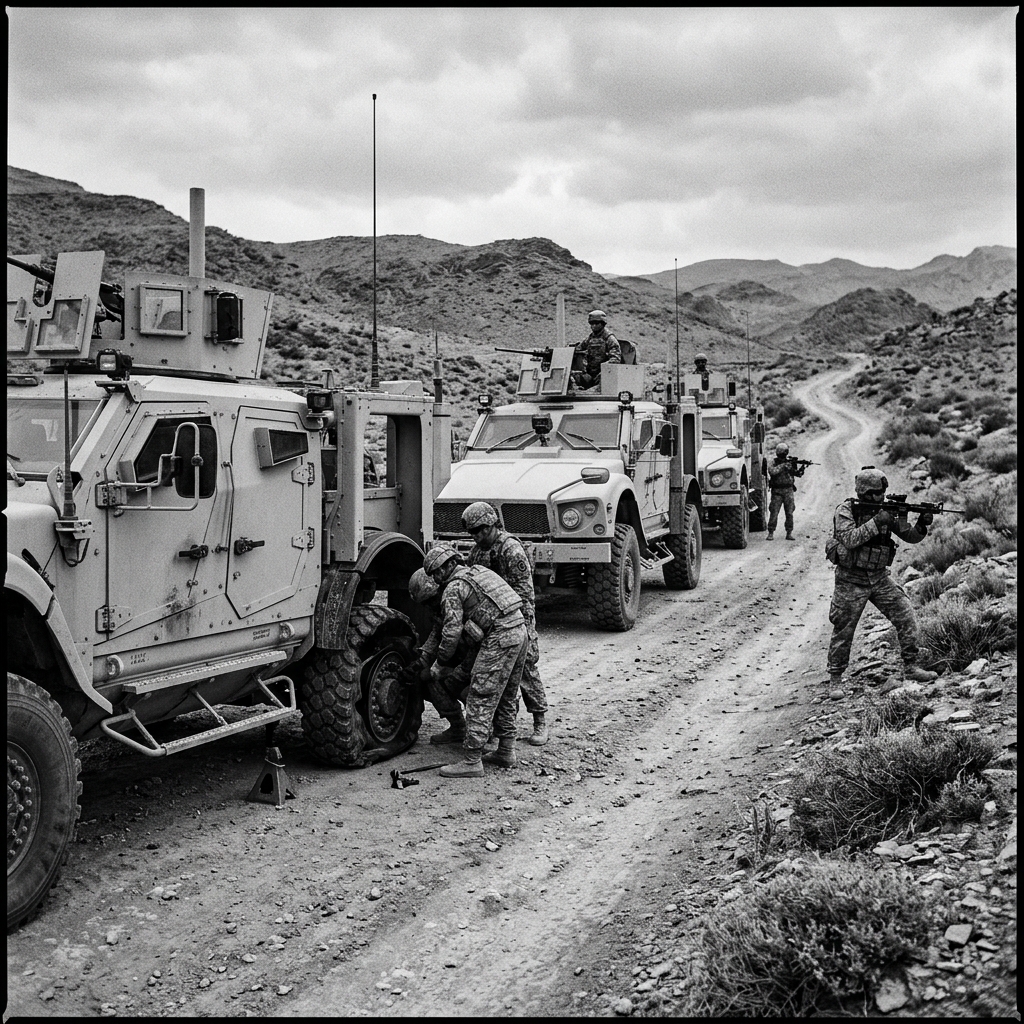
Modern military logistics operates on a tiered maintenance concept. Depot-level facilities have the equipment, environment, and expertise to service run-flat tire systems efficiently and safely. Field-level units — the ones that actually encounter tire failures during operations — typically have none of these advantages. This gap between capability and need is where military tire replacement risk concentrates.
At depot level, a tire machine for armored vehicles with hydraulic press capability can process a full runflat assembly for military vehicles in under 4 minutes. Climate-controlled bays, proper lifting equipment, and trained technicians make the process routine. But when that same tire fails 200 kilometers forward on a patrol route, the crew faces a completely different reality.
Why Field Maintenance Fails
The failure points in field-level military runflat servicing are systematic, not random:
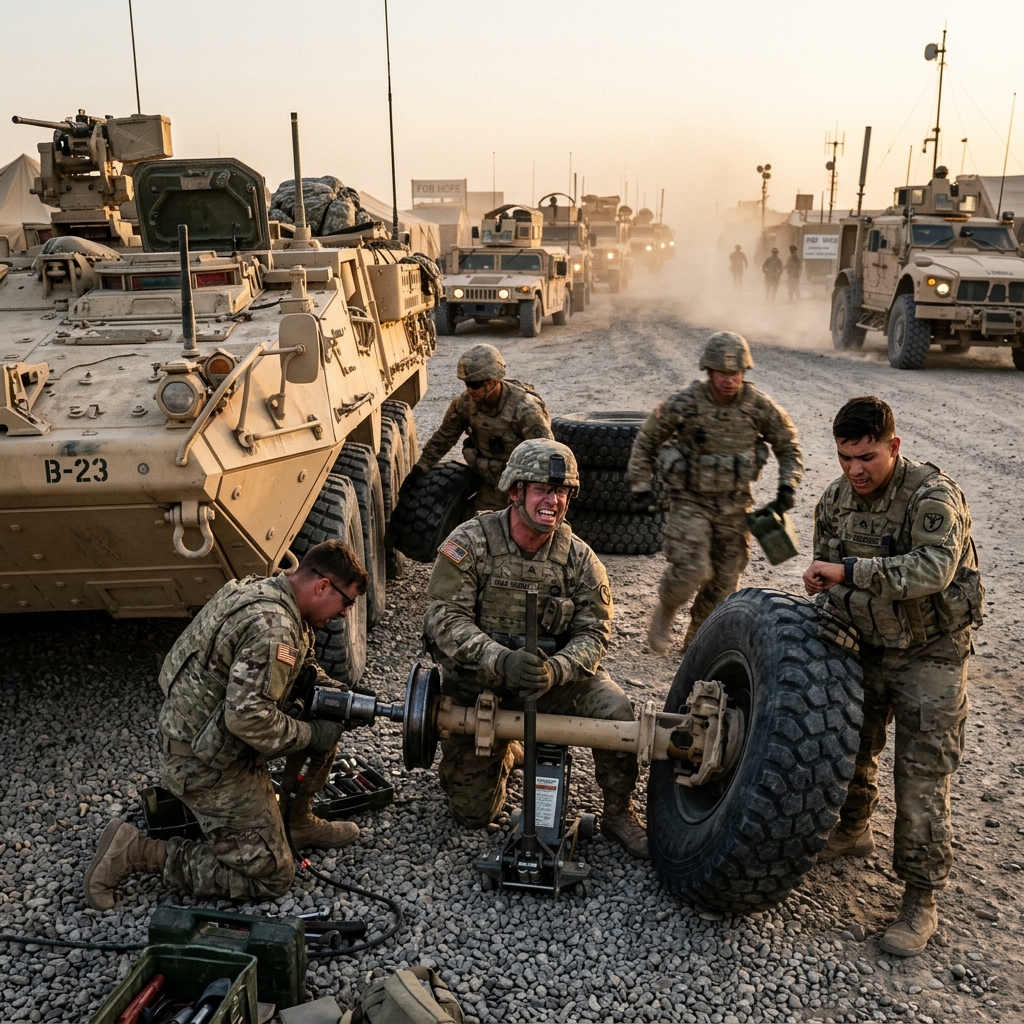
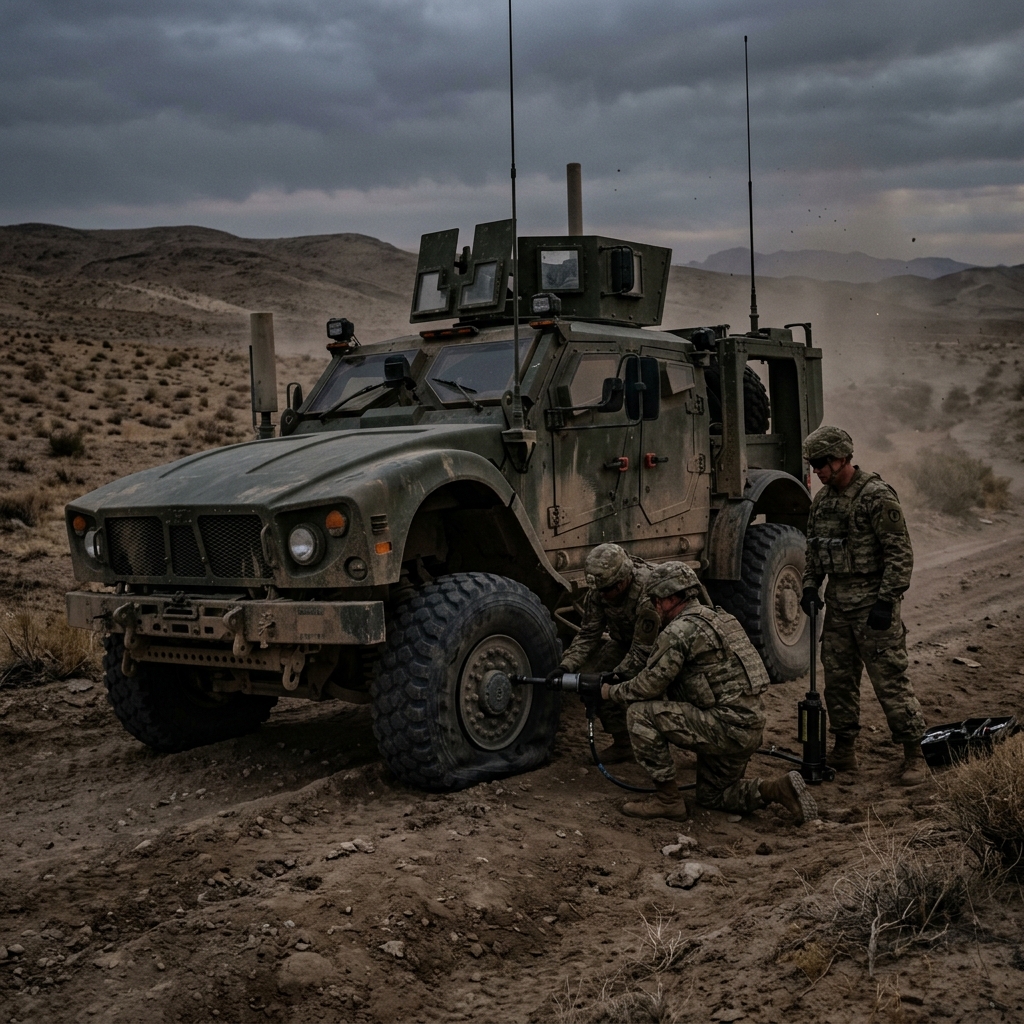
- No hydraulic capability: Field crews rely on hand tools, sledgehammers, and improvised leverage. A run flat machine for military vehicles isn't available at their level.
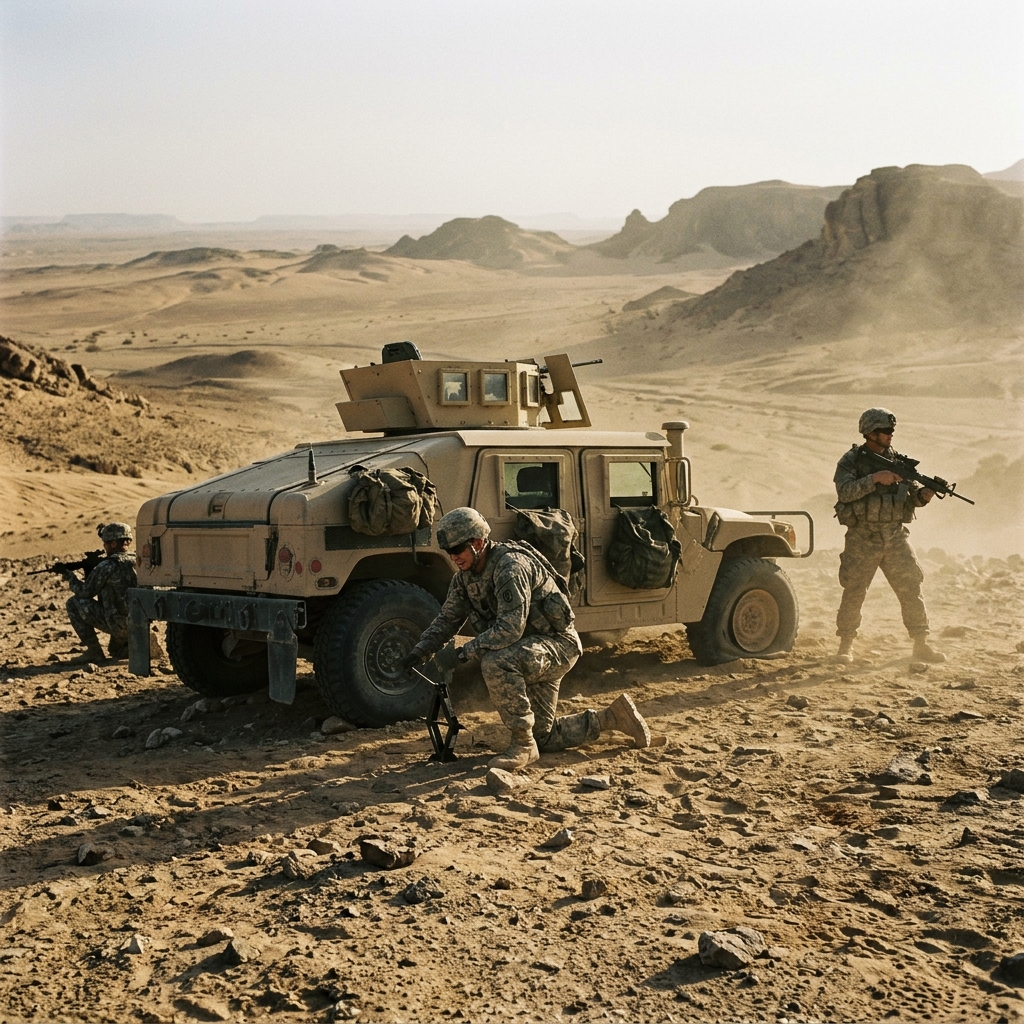
- Environmental exposure: Desert heat, arctic cold, mud, and rain all degrade crew performance and tool effectiveness during runflat disassemble for military vehicles operations.
- Limited personnel: Forward units can't spare 3–5 personnel for 45 minutes without impacting security and mission capability.
- No component protection: Manual extraction methods frequently damage rims, run flat inserts, and tire beads — creating additional maintenance requirements.
The irony of modern armored fleet maintenance: the vehicles are designed to survive combat, but the tire service process creates more personnel risk than many operational scenarios.
Closing the Gap: Mobile Solutions
The traditional answer to the field-depot gap was evacuation — tow the vehicle back to a depot for tire service. But evacuation adds hours or days of downtime, requires recovery assets, and removes the vehicle from operational availability. The modern answer is fundamentally different: bring depot capability forward.
This is where mobile and containerized solutions have transformed the equation. A trailer-mounted field runflat changer can be towed to any position by standard military vehicles and made operational in minutes. Everything needed — hydraulic press, power generation, operator station — deploys as a complete system. Discover how the GMT-099 Trailer Model brings full capability to any forward position
The Containerized Alternative
For semi-permanent forward operating bases and brigade support areas, the ISO container configuration takes the concept further. A standard 20-foot container houses a complete military run flat replacement machine with climate control, integrated power, lighting, and operator protection. It can be positioned by standard logistics transport — helicopter, truck, or rail — and provides run flat changer for armored vehicles capability equivalent to a permanent depot installation.
The impact on field maintenance capability is immediate and measurable. Units that previously evacuated vehicles for tire service now process them in-place, maintaining both the vehicle and the security posture. See the full range of mobile and containerized deployment options
Forces operating containerized runflat machine for military vehicles systems report eliminating vehicle evacuation for tire service entirely — a logistics saving that compounds across every maintenance cycle.
Measuring the Impact
The field-depot gap isn't theoretical — it's measured in operational metrics that matter:
- Vehicle availability: Forces with forward-deployed military runflat machine systems maintain 15–20% higher fleet availability than those relying on depot evacuation.
- Recovery asset utilization: Eliminating tire-related evacuations frees recovery vehicles for actual combat recovery — their intended purpose.
- Personnel exposure: Machine-assisted run flat assembly for military vehicles reduces crew exposure from 30+ minutes to under 5 minutes per wheel.
- Component preservation: Controlled hydraulic operations eliminate the rim and insert damage common with manual methods.
The evidence is clear across every deployment environment — from desert to arctic, from permanent bases to expeditionary positions. Organizations that have closed the field-depot gap with purpose-built tire machine for armored vehicles report consistent, measurable improvements in every readiness metric that matters. Watch the deployment and operation process in real-world conditions
Ready to close the maintenance gap between your depot and your field forces?
Request Operational Briefing